
GenF20 Plus is a natural HGH-releasing supplement by Leading Edge Health — designed to help men 30+ support the body’s own growth hormone production naturally, without injections. Sold exclusively through the official site with multi-box bundle savings, discreet delivery, and a 67-day money-back guarantee.
Trial option
Best starting point
Lowest per-box cost
Quick disclaimer: This guide is for educational purposes and does not replace medical advice. Dietary supplements aren’t FDA-approved as treatments, and individual results vary. If you have a medical condition, take medications, or you’re unsure, talk to a qualified clinician before trying anything new.
GenF20 Plus is one of those “HGH support” supplements that sits right in the middle of two worlds: real physiology (growth hormone and IGF-1 are absolutely real) and marketing land (where “anti-aging” gets thrown around like a magic spell).
So here’s how this guide works: I’m going to tell you what GenF20 Plus is, what it’s trying to do, what the human research actually showed, where expectations usually go wrong, and how to test it in a smart, low-risk way. No miracle talk. No fear-mongering either. Just the facts and the practical stuff.
Quick Navigation
- Quick Verdict
- HGH + IGF-1 in plain English
- Does HGH “slow aging”?
- What GenF20 Plus is (and what it isn’t)
- What the research on GenF20 Plus actually found
- Ingredients deep-dive (what’s plausible, what’s fuzzy)
- Safety, side effects, who should skip it
- How to use it like a sane person (tracking plan)
- Buying guide: bundles, guarantee, counterfeit risk
- Smart alternatives (depending on your real goal)
- FAQ
Quick Verdict (Straight Talk)
- Best fit for: adults who want a structured “wellness + recovery support” routine and are okay with subtle results, not dramatic transformations.
- Not a fit for: anyone chasing “anti-aging HGH” promises or expecting injection-like effects.
- Evidence reality: there is a published human study on GenF20 Plus, but the overall results were mixed and not “wow.” One age subgroup (40+) showed a better IGF-1 response, while many other outcomes didn’t clearly beat placebo.
- Safety reality: it’s a dietary supplement, not a medication. That means: you still need to be smart about interactions and your medical context.
- My honest recommendation: treat it as a risk-managed experiment (8–10 weeks), track a few outcomes, and use the guarantee if it’s not for you.
Also important: dietary supplements are regulated differently from drugs, and they aren’t “FDA-approved” for effectiveness before marketing. If you want a clean explanation of what that actually means, read the FDA’s own consumer overview here: FDA: Information for Consumers on Using Dietary Supplements.
HGH + IGF-1 in plain English (so the marketing doesn’t confuse you)
Growth hormone (GH / HGH) is produced by your pituitary gland in pulses — it’s not a steady “all day” hormone. One of the downstream signals people measure is IGF-1, which tends to be more stable than GH and is commonly used in clinical contexts as part of evaluating the GH axis. MedlinePlus explains the difference and why IGF-1 is often used for testing here: MedlinePlus: Growth Hormone Tests.
Now, yes: GH secretion tends to decline with age. That’s real physiology. One clinical overview notes that spontaneous GH secretion declines by about ~14% per decade in adult life (as part of broader endocrine aging patterns): NCBI Bookshelf: Adult Growth Hormone Deficiency – Clinical Management.
Here’s the key point most people miss: decline with age doesn’t automatically mean “you should try to push it back up.” It means you should be careful, realistic, and not let “anti-aging HGH” marketing do the thinking for you.
Does HGH “slow aging”? (What credible medicine says)
If you google HGH and anti-aging, you’ll see a lot of aggressive claims. But mainstream medical sources are much more cautious. For example, Mayo Clinic’s overview is pretty blunt that there’s little research supporting HGH for otherwise healthy adults and that experts recommend against using HGH for aging/age-related conditions: Mayo Clinic: Human growth hormone (HGH): Does it slow aging?.
Also, professional clinical guidelines for adult GH deficiency (treatment context, not “anti-aging”) explicitly note that GH treatment is not approved as an anti-aging therapy. You can see that position stated in the guideline publication here: JCEM Guideline: Evaluation and Treatment of Adult Growth Hormone Deficiency.
So if you’re buying GenF20 Plus mainly because you want “anti-aging HGH,” I’m not going to hype that. A supplement can support wellness routines — but it’s not a legal/medical substitute for diagnosing or treating hormone disorders.
What GenF20 Plus is (and what it isn’t)
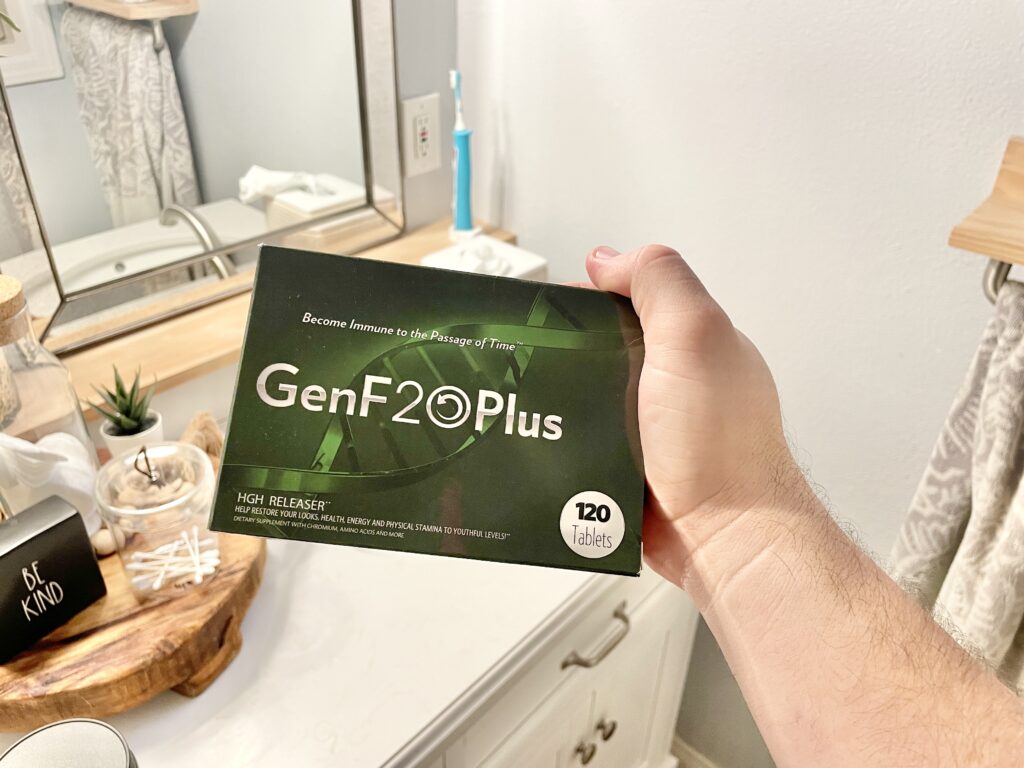
GenF20 Plus is marketed as an “HGH releasing system” using a blend of amino acids + supporting compounds. The concept is: provide building blocks and signals that may support normal GH pathways (especially around sleep, recovery, and stress load).
What it is not:
- It’s not synthetic HGH.
- It’s not a treatment for GH deficiency.
- It’s not a guaranteed body composition transformation.
Think of it like this: if you’re doing nothing right (sleep, training, nutrition), a supplement won’t “save” the situation. If you have decent basics, some people report a noticeable “recovery / vitality” lift. But that’s not the same thing as “turning back the clock.”
What the research on GenF20 Plus actually found (no cherry-picking)
There is a published randomized controlled study on GenF20 Plus that looked at changes in IGF-1 and several other outcomes. You can read the full paper PDF here: Open Access Journal of Clinical Trials (2015): GenF20 Plus vs placebo (PDF).
Here’s the straight talk summary of what matters:
- IGF-1: IGF-1 increased in both groups overall, but the overall difference wasn’t a slam dunk. In a subgroup analysis, the 40+ group showed a better IGF-1 change vs placebo.
- Body composition: measures like BMI, waist circumference, body fat %, and lean body mass did not show large, clear differences over the study period.
- Quality-of-life type measures: some measures improved in both groups; differences between groups weren’t consistently strong.
- Tolerability: the study reported adverse events, mostly mild, and no serious adverse events were reported.
What does that mean in normal human terms? If you’re 45+ and you want to try a structured “HGH support” supplement, the data is at least interesting. But if you’re expecting visible “before/after” body changes in 4–8 weeks — this study does not justify that expectation.
Ingredients deep-dive: what’s plausible, what’s fuzzy
GenF20 Plus formulas tend to focus on amino acids (arginine, lysine, ornithine, glycine, glutamine, etc.) plus “support” components. Here’s the honest breakdown you should keep in mind:
1) Amino acids: plausible mechanism, but dosage/context matter
Amino acids are real players in physiology and neurotransmitter signaling. But with GH pathways, context matters a lot: timing, sleep status, training, baseline health, and dosage. This is why supplement formulas can look “scientific” while outcomes vary massively person-to-person.
2) GABA: some evidence it can influence GH response (but don’t over-interpret)
Oral GABA has been studied in relation to growth hormone response. For example, one study looked at GH responses to GABA ingestion (at rest and around resistance exercise): PubMed: Growth hormone responses to GABA ingestion (2008).
Important: “it affects GH in a study” is not the same as “it will visibly transform your body.” It may be part of why some users feel improved relaxation or sleep depth (which can support recovery). But if your sleep is already a mess, fix that first — it’s the higher leverage move.
3) IGF-1 isn’t a toy number
People obsess over IGF-1 because it’s measurable. But IGF-1 can be influenced by different health conditions, and interpretation should be clinical (not “I saw a number, so I’m younger now”). Mayo Clinic notes IGF-1 is an important marker in acromegaly evaluation and also mentions it can be elevated in other conditions as well: Mayo Clinic: IGF-1 in diagnosis (and why context matters).
So if you’re the type who wants to run labs, do it with a clinician and don’t self-diagnose.
4) Bottom line on ingredients
- Plausible for: recovery support, sleep routine support, “vitality” perception in some users.
- Not proven for: dramatic fat loss, muscle gain, or “reverse aging” outcomes.
- Best use case: you already have a routine, you want to test something for 8–10 weeks, and you’re willing to stop if it’s not delivering value.
Safety, side effects, who should skip it ⚠️
Let’s keep this clean and responsible: GenF20 Plus is a dietary supplement. That doesn’t automatically mean “risk-free.” If you’re on medications, have chronic conditions, or have had hormone-related issues in the past, talk to a clinician first.
Common “could happen” issues people report with this category
- Digestive discomfort (especially early).
- Headache or “wired” feeling in some users (often tied to timing or sensitivity).
- Sleep changes (good for some, annoying for others).
People who should be extra cautious (or skip)
- Anyone with known endocrine/pituitary disorders (don’t DIY hormones).
- People with poorly controlled diabetes or significant insulin resistance (talk to your doctor).
- Anyone with cancer history or hormone-sensitive conditions (medical guidance matters here).
- Pregnancy / breastfeeding (skip unless your doctor says otherwise).
Also: if any supplement makes “treat, cure, prevent disease” promises — treat that as a red flag. That’s not how supplements are supposed to be marketed, and the FDA literally explains the difference between supplements and drugs in plain language: FDA: Dietary supplement basics for consumers.
How to use it like a sane person (the 8–10 week tracking plan)
If you want to try GenF20 Plus, don’t do the “take it randomly and hope” approach. Do a simple experiment:
Step 1: Pick 3 outcomes to track (not 12)
- Sleep quality: time to fall asleep + how you feel on wake-up (simple 1–10 score).
- Energy consistency: afternoon crash yes/no + 1–10 score.
- Training recovery (if you train): soreness and performance consistency.
Step 2: Control the obvious variables
- Keep caffeine consistent (don’t change coffee habits mid-test).
- Keep training volume roughly stable.
- Don’t stack 5 new supplements at once (you’ll learn nothing).
Step 3: Give it a fair window
A realistic trial is 8 weeks. Some people go 10–12 weeks. If nothing improves in a meaningful way, move on.
Optional: labs (only if you know what you’re doing)
If you’re going to check anything, IGF-1 is typically the more stable marker discussed in testing info (again: talk to a clinician). MedlinePlus explains why IGF-1 is used since GH itself varies through the day: MedlinePlus: GH testing overview.
Buying guide: bundles, guarantee, and avoiding headaches
This is the part most people care about once they decide to try it. You want two things: (1) buy from the real source and (2) understand the guarantee rules before you pay.
Guarantee (read this before you order)
The “risk-free” policy that’s commonly associated with Leading Edge Health products states you can try for 60 days and return the empty containers within 67 days from delivery for a refund (minus shipping), with some conditions.
Bundles / pricing
Prices change, so I’m not going to lock a number in your head. The best move is to check the current bundles directly on the official order page:
✅ Pro tip: If you’re testing, a multi-month bundle only makes sense if the guarantee terms actually protect you the way you think they do. Always read the fine print first.
My counterfeit/scam rule
If you see a listing that looks “too cheap,” assume it’s either old stock, unauthorized resell, or a look-alike. Stick to the official source for the first purchase — at least you’ll have clear support and clear refund terms.
Smart alternatives (depending on your real goal)
A lot of people click GenF20 Plus for “energy and vitality,” but their real goal is different. So here are smarter matches depending on what you actually want:
- If your real goal is male performance + confidence support: check your VigRX Plus buying guide.
- If your real goal is testosterone-oriented lifestyle support (training, drive, recovery basics): check your Testosil guide.
- If your real goal is fertility/semen volume support content (education-first): point them to your Semenax buying guide.
Straight talk: the “best supplement” depends on the goal. Don’t force GenF20 Plus into a job it wasn’t built to do.
FAQ
Is GenF20 Plus the same as HGH injections?
No. Not even close. Injections are a medical therapy used in specific diagnoses. Even medical sources warn against using HGH as an “anti-aging” shortcut in healthy adults — see Mayo Clinic’s overview: Mayo Clinic: HGH and aging.
How long until I feel anything?
Some people notice sleep/recovery changes within a couple of weeks. Others need 6–8 weeks. If you feel nothing meaningful by week 8, that’s a clean signal to stop.
Can I take it if I have a medical condition?
That depends on the condition and medications. Don’t guess. If you have endocrine issues, diabetes concerns, or a complex medical history, get clinician guidance.
Can I stack it with other supplements?
You can, but don’t stack during the first month if you want to learn anything from your test. Add one variable at a time.
Final take
GenF20 Plus is best viewed as a structured wellness experiment, not a promise of “anti-aging HGH.” The research doesn’t support wild outcomes — but it does justify curiosity for some adults (especially 40+) who want to see if sleep quality, recovery, and day-to-day vitality improve.
If you try it, do it smart: track a few outcomes, control the basics, and use the guarantee if it’s not delivering value.
Affiliate / editorial note: This content is for general educational purposes and does not provide medical advice. Dietary supplements are not intended to diagnose, treat, cure, or prevent disease. If you have a medical condition or take medications, consult a qualified healthcare professional.
